Y-90 Radioembolization: A Targeted Treatment Option for Liver Cancer
March 2, 2026
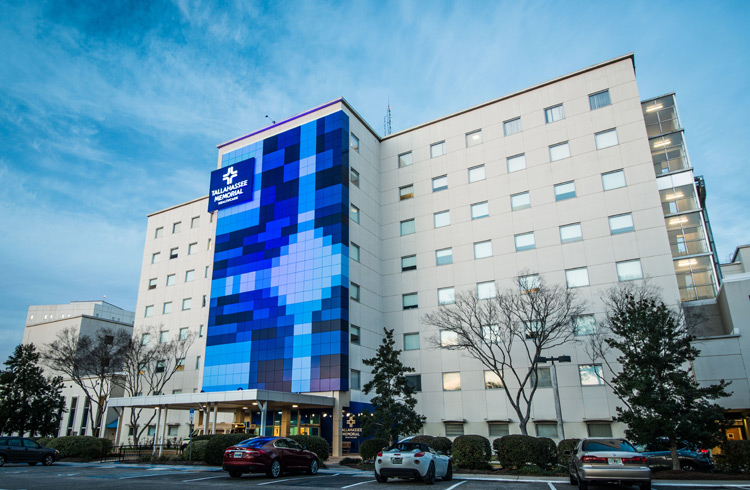
Patients with liver cancer in the Big Bend can now be treated with a minimally invasive procedure designed to target tumors directly at Tallahassee Memorial HealthCare (TMH). Y-90 Radioembolization is an advanced interventional radiology treatment that delivers targeted radiation to fight liver cancer and other liver diseases.
While Y-90 radioembolization does not eliminate liver cancer, it has been proven to shrink tumors and slow disease progression. This can help patients live longer and reduce cancer-related symptoms.
By shrinking tumors, Y-90 treatment may also help some patients become more eligible for additional treatment options, like surgery or a liver transplant.
What is Y-90 Radioembolization?
The term “Y-90” is short for Yttrium-90, a radioactive substance that kills cancer cells with minimal or zero damage to healthy liver tissue.
Yttrium-90 is delivered directly into the bloodstream using millions of tiny beads, allowing physicians to target liver tumors and shrink them.
Preparing for Y-90 Treatment
To prepare for Y-90 radioembolization, you’ll need to complete several tests to ensure the procedure is safe and appropriate for you. These tests may include a physical exam, blood tests and liver function tests.
You and your healthcare provider will also discuss:
- Your medical history
- Chance of pregnancy
- Allergies
- Medications you’re taking
Before your procedure, your provider will review important instructions, including when to stop eating and drinking, whether you will need to arrange transportation home and any post-procedure care.
What to Expect During the Y-90 Procedure
Y-90 radioembolization is a two-step process: a mapping angiogram and the Y-90 infusion. These steps happen about two weeks apart.
Step 1: Mapping Angiogram
Think of the angiogram like the test run for the infusion. It involves an imaging process that reveals the network of blood vessels supplying blood to the tumor. This helps your physician map a route for inserting the Y-90 beads.
First, your physician will administer anesthesia to numb the area and make a small incision on your wrist, creating an access point. Because the incision is very small, stitches are not usually needed. If needed, your care team may also provide a sedative to help you relax.
Once the artery is located, your doctor will thread a catheter, or a small plastic tube, through the blood vessel. Advanced imaging technology allows your physician to see the catheter’s location in real time on a screen.
A safe contrast dye is injected through the catheter, allowing your doctor to see the network of blood vessels supplying the tumor. This mapping determines where the Y-90 beads will be delivered during your infusion.
At the end of the angiogram, the catheter is removed, and a bandage is placed on your wrist to stop any bleeding.
Step 2: Y-90 Infusion
This process usually takes one to two hours. The setup—including the incision and catheter—is similar to the mapping angiogram. This time, your provider will inject the Y-90 beads instead of the contrast dye.
The Y-90 beads are millions of microscopic glass or resin beads that travel through the bloodstream to the tumor.
Once the beads reach the tumor, they become lodged in the small blood vessels, blocking blood flow within the tumor and delivering targeted radiation. The radiation travels less than half an inch, helping destroy cancer cells while sparing healthy liver tissue.
The beads continue to release radiation after the procedure, with approximately 90% of the radiation being delivered within 10 days. Over time, the beads decay and are safe to stay in your body.
Recovery After Y-90 Treatment
After the procedure, you will be monitored for four to five hours in a recovery area. Most patients return home the same day, although an overnight stay may be recommended in some cases.
Your next steps will be determined by you and your physician. Some patients undergo additional Y-90 treatments, while others become eligible for chemotherapy or surgery.
Risks and Side Effects of Y-90 Radioembolization
As with many cancer treatments, there are some risks involved with Y-90 radioembolization.
Common side effects include fatigue or weakness lasting one to two weeks. More severe symptoms can be attributed to post-embolization syndrome (PES). These signs include:
- Nausea
- Vomiting
- Loss of appetite
- Stomach pain
- Fever
These symptoms usually disappear within a week. Contact your physician if your symptoms persist, as medications are available to help manage them.
More serious risks include infection, allergic reactions and ulcers.
Infections, most commonly at the catheter insertion site, can be treated with antibiotics. Allergic reactions are rare and often prevented through pre-procedure screening, but you should notify your physician immediately if symptoms occur.
Stomach or duodenal ulcers can develop if the Y-90 beads travel to your stomach or small intestine. To reduce this risk, your physician may block certain blood vessels before treatment.
Who is a Candidate for Y-90 Treatment?
Those eligible for Y-90 treatment typically have primary or metastatic liver cancer.
- Primary liver cancer begins in the liver and may involve one or more tumors.
- Metastatic liver cancer originates elsewhere in the body and spreads to the liver.
Patients with cholangiocarcinoma, or bile duct cancer, are also candidates for Y-90 treatment. This is an aggressive cancer that starts in your bile ducts, thin tubes that connect your liver, gallbladder and small intestine.
Y-90 treatment is normally recommended when surgery is not an option. This can happen when tumors are too close to major blood vessels and surgery could risk severe liver damage.
Begin Your Treatment Plan with TMH
Y-90 radioembolization procedures are performed at Tallahassee Memorial HealthCare by Jason Mitchell, MD, of Radiology Associates of Tallahassee, using advanced imaging technology in a hospital setting designed for complex cancer care.
At TMH, this treatment is part of a coordinated, multidisciplinary approach through the Tallahassee Memorial Cancer Center, where specialists in oncology, radiology, surgery and supportive care work together to create personalized treatment plans for each patient.
If you or a loved one has liver cancer, talk with your oncologist about whether Y-90 radioembolization may be an option.