What You Should Know About Interstitial Brachytherapy for Gynecologic Cancer Care: A Q&A with Dr. Christine Fitzsimmons and Dr. Joshua Dault
September 4, 2026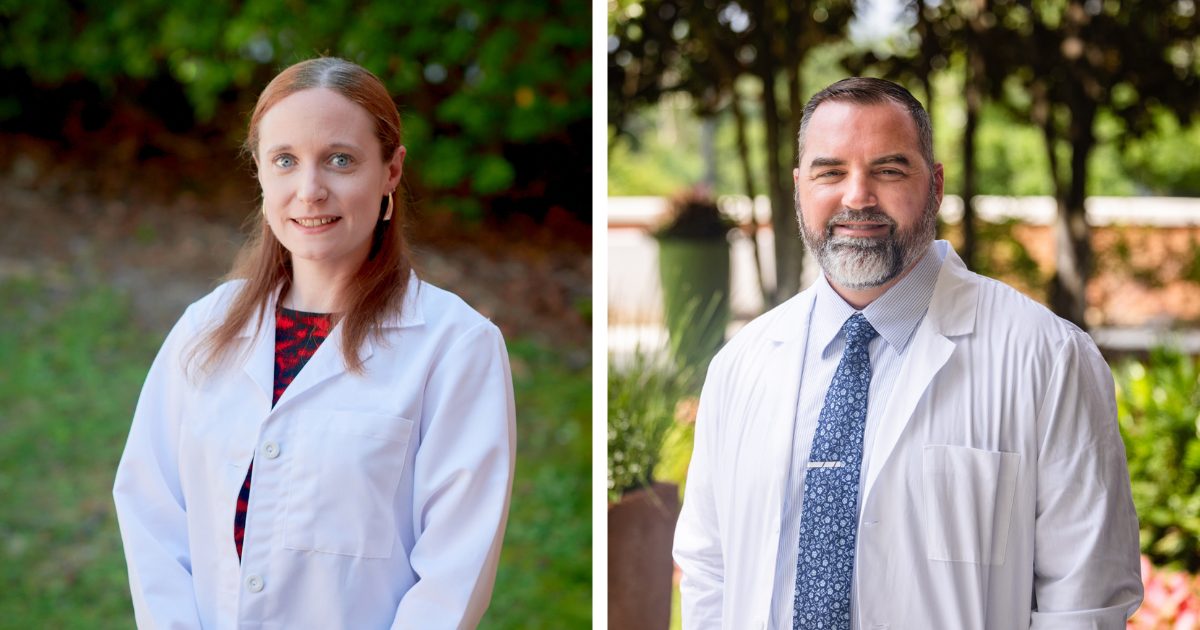
By: Tallahassee Memorial HealthCare
Categories: Cancer Care, Healthy Living
Tags: Women's Health, Gynecologic Cancer, Radiation Oncology
For patients facing cervical or other gynecologic cancers, access to highly specialized treatment can make a meaningful difference. TMH now offers interstitial brachytherapy, bringing an advanced, highly targeted radiation treatment to patients across the region without the need to travel hours from home.
To give more insight into this treatment, Christine Fitzsimmons, MD, a Gynecologic Oncologist with TMH Physician Partners – Gynecologic Oncology, and Joshua Dault, MD, a Radiation Oncologist with TMH Physician Partners – Radiation Oncology, answered questions about the procedure, how it works, who may benefit and why it is important for patients throughout the region.
What is interstitial brachytherapy?
Dr. Fitzsimmons: Brachytherapy allows us to deliver a higher dose of radiation directly to the cervix or another targeted area. For some patients, the tumor’s size, shape or location makes a standard brachytherapy approach less effective. Interstitial brachytherapy gives us greater flexibility to tailor the radiation treatment to the individual tumor and deliver the dose needed for the best possible outcome.
How is interstitial brachytherapy different from other forms of brachytherapy?
Dr. Dault: Brachytherapy is an important part of treating certain gynecologic cancers and is recommended as part of definitive treatment based on national guidelines. The decision is sometimes not whether to use brachytherapy, but how best to deliver it.
Interstitial brachytherapy is one option for patients with larger tumors or tumors that cannot be adequately treated using other forms of brachytherapy. That decision is made collaboratively based on the patient’s individual circumstances.
Dr. Fitzsimmons: Additionally, instead of relying on a standardized applicator, we use a specialized template that allows us to design the treatment around the patient’s tumor. Needles are carefully placed through the template and then exchanged for catheters, allowing us to deliver radiation precisely where it is needed.
What does the procedure look like for patients?
Dr. Fitzsimmons: The procedure begins in the operating room and is performed jointly by a gynecologic oncologist and a radiation oncologist. We use imaging and direct visualization through a diagnostic laparoscopy to guide the placement of the needles and ensure they are positioned safely.
The needles are then exchanged for catheters, and the device is secured in place. At the Tallahassee Memorial Cancer Center, the catheters are connected to a radiation source that delivers the prescribed radiation directly to the tumor.
What can a patient expect during the hospital stay?
Dr. Fitzsimmons: Patients are typically hospitalized for about three days. After the device is placed, the patient stays in the intensive care unit (ICU), where the ICU team provides close monitoring and a multimodal pain management plan to keep the patient as comfortable as possible.
During the hospital stay, the patient is transported between the hospital and the Cancer Center for five radiation treatments. After the final treatment, the device and catheters are removed.
Why does this treatment require a multidisciplinary team?
Dr. Dault: Having an in-house team improves the patient’s care and helps create a more seamless treatment experience. We can discuss cases directly with one another in addition to reviewing them through our multidisciplinary tumor board conferences.
These can be very complex situations, and it often takes multiple specialists working together to determine the best path for the patient. With an interstitial implant, radiation oncology and gynecologic oncology work very closely throughout the process. We each bring a different area of expertise and support one another during the procedure. It is very much a team approach.
This is a collaborative and highly specialized treatment. Working as a team gives us the opportunity to review cases together, discuss different approaches and benefit from one another’s perspectives. It also strengthens our ability to make this treatment consistently available to patients who need it.
Dr. Fitzsimmons: The ICU team is also closely involved. Because this is an invasive procedure, we work together to make it as safe and comfortable as possible while the patient receives treatment.
Will patients need additional treatment afterward?
Dr. Fitzsimmons: Interstitial brachytherapy is delivered with curative intent and is typically the final major radiation treatment directed at the tumor. Some patients may still require systemic therapy delivered through an IV, depending on their diagnosis and individual treatment plan.
Why is offering interstitial brachytherapy at TMH so important for patients in this region?
Dr. Dault: For many gynecologic cancers, interstitial brachytherapy may be the best definitive treatment option when other forms of brachytherapy are not appropriate. It is also not a procedure that is widely available in this region. Without this program at the Tallahassee Memorial Cancer Center, patients might need to travel to centers five to six hours away to receive this care. Being able to offer it here improves the overall care available throughout our region.
What do you want patients to understand about this treatment?
Dr. Fitzsimmons: We recognize that this is an invasive procedure and can sound intimidating. Our entire team works together to perform it safely, manage discomfort and support the patient throughout the hospital stay. For someone who needs this treatment, interstitial brachytherapy may provide the best opportunity to deliver a curative dose of radiation and achieve the strongest possible cancer outcome. It can be lifesaving.
Dr. Dault: This is an important treatment option, and we have a highly capable team in place to provide it. Our ability to offer interstitial brachytherapy locally means patients throughout the region can access a higher level of specialized gynecologic cancer care and stay close to the people and support systems they need the most during their treatment.
To learn more about gynecologic cancer care at Tallahassee Memorial HealthCare (TMH), visit TMH.ORG/GynCancer.